Saint-Félix
Saint-Félix has 2,438 residents and 1,108 homes, 62% of them houses. Homes sold for a median €3,720/m² over five years, 15% below the département figure. The median living standard is €26,300 a year. Around the town hall, 16 everyday shops and services are within a 15-minute walk.
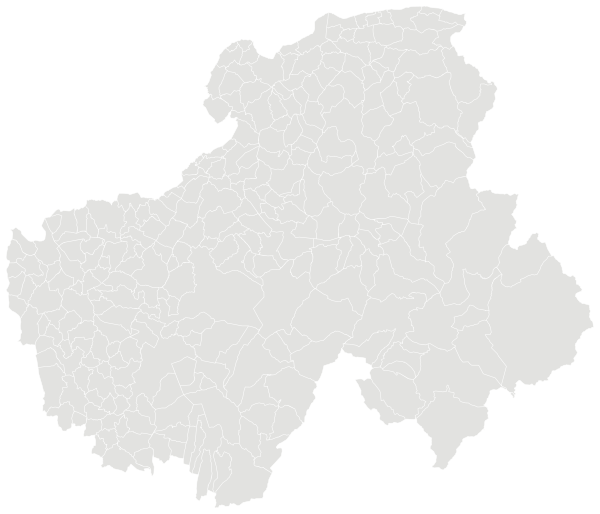

Sources: IGN and Insee, IRIS boundaries and Admin Express 2024 (Open Licence 2.0) · © OpenStreetMap contributors (ODbL)
People.
2,438 residents and 1,025 households at the 2022 census, next to the département figure.
Source: Insee, 2022 population census (sub-municipal files, Open Licence 2.0)
Homes.
1,108 homes, 93% of them main residences, with 4.2 rooms on average.
When main homes were built
Source: Insee, 2022 population census (sub-municipal files, Open Licence 2.0)
Property prices.
129 house and flat sales over five years.
Median prices from sales published in France’s Demandes de valeurs foncières (DVF) over ten half-years, for sales of a single property. Individual sales are not shown. A median is only given where there were at least ten sales.
Source: DGFiP property sales (DVF), data.gouv.fr statistics (Open Licence 2.0)
Income and work.
Median living standard of €26,300 a year in 2021.
Living standard is a household’s disposable income after taxes and benefits, divided by its consumption units. Half of residents live on less than the median. Income on its own says nothing about what a neighbourhood is like to live in.
Sources: Insee, Filosofi 2021 income data (Open Licence 2.0) · Insee, 2022 population census (sub-municipal files, Open Licence 2.0)
Safety.
Offences recorded in 2025, with the rate per 1,000 residents and the change from 2024.
| Indicator | 2025 | Rate | Change |
|---|---|---|---|
| Burglaries of homes | 8 | 7.2 per 1,000 | +33% |
| Thefts from people without violence | 10 | 4.1 per 1,000 | +100% |
| Armed robberies | 0 | 0.0 per 1,000 | – |
| Deliberate damage and vandalism | 7 | 2.9 per 1,000 | – |
| Fraud and payment card fraud | 12 | 4.9 per 1,000 | +33% |
These figures count offences recorded by the police and gendarmerie, not how safe a place feels, and not every offence is reported. Rates are per 1,000 residents (per 1,000 homes for burglaries): where many people visit but few live, as in town centres and shopping areas, they are naturally higher. Small counts are not published.
Source: Ministry of the Interior (SSMSI), recorded crime by municipality 2024–2025 (Open Licence 2.0)
Everyday life.
What is within one kilometre of the town hall. 3 public transport stops are within 800 m, and the nearest rail or tram station is 2.5 km away.
Source: © OpenStreetMap contributors (ODbL)
Health, shops and services.
Facilities and services in Saint-Félix on 1 January 2025, from Insee’s permanent database of facilities.
Insee’s permanent database of facilities lists the shops, services and health professionals present in each commune on 1 January. Health professionals in private practice are counted one by one; several may work at the same address.
Source: Insee, permanent database of facilities 2025 (Open Licence 2.0)
Natural and industrial hazards.
Major hazards the State lists for Saint-Félix, prevention plans in force and natural-disaster declarations since 1982.
Natural-disaster declarations by type
A natural-disaster declaration (arrêté CatNat) lets insurers pay out for the damage. The count reflects past events, not a forecast of future risk. The list of hazards comes from each département’s major-risk file; a prevention plan in force limits building in exposed zones.
Source: Géorisques, GASPAR database (Open Licence 2.0), as of 5 October 2026
Schools.
1 primary and nursery schools, 0 collèges and 0 lycées are open here, 1 of them state schools.
Source: Ministry of Education, school directory (Open Licence 2.0). Admission depends on catchment rules and each school’s own policy.
Nearby communes.
The communes in the département whose town halls are closest.